
Introduction
Football, the beautiful game, is not just about scoring goals; it’s also about understanding the rules that govern it. One such rule that often perplexes both players and fans is the offside rule. In this article, we’ll delve deep into what is offside in football, breaking down the concept, its history, controversies, and much more. So, let’s kick off!
What Is Offside in Football?
To comprehend the offside rule, you need to know that a player is in an offside position if:
- They are nearer to the opponent’s goal line than both the ball and the second-to-last defender when the ball is played to them.
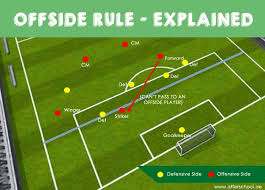
In simpler terms, a player cannot position themselves closer to the opponent’s goal line than the ball and the second-to-last defender when they receive a pass. If they do, they are considered offside. Now, let’s explore some key aspects of this rule.
The History of Offside
The offside rule has a rich history dating back to the early days of football in the 19th century. Originally, there were no restrictions on a player’s position in relation to the opponents’ goal line. However, this led to “goal-hanging,” where forwards would camp near the opponent’s goal. To address this issue, the offside rule was introduced in 1863 by the Football Association in England.
How Offside Works
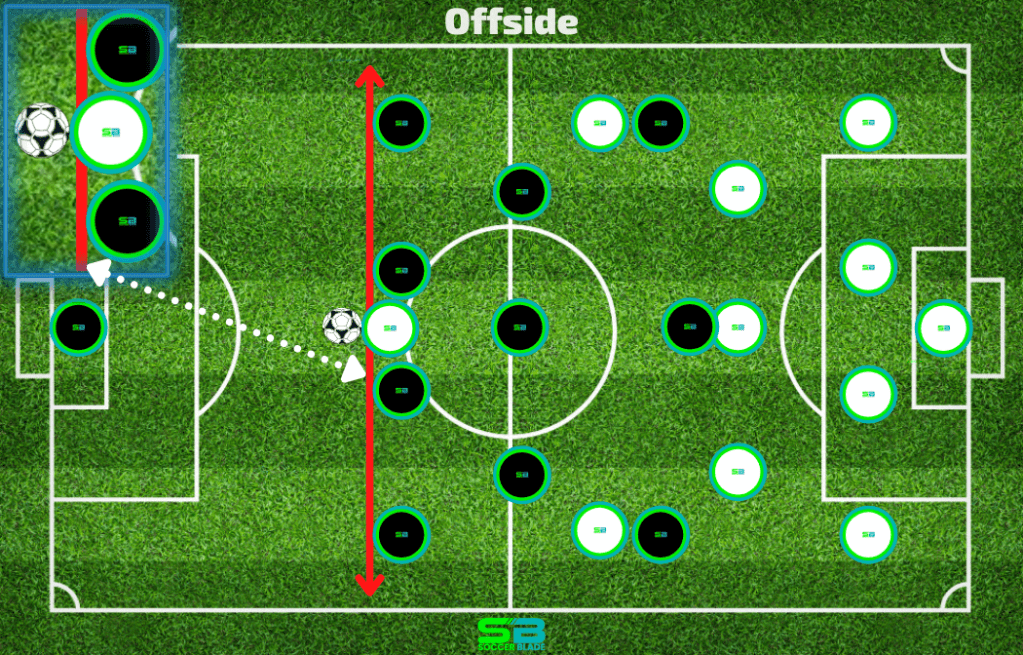
Offside decisions can be quite contentious, as they rely on split-second judgments by officials. To avoid being penalized, an attacking player must time their run perfectly, ensuring they are not ahead of the second-to-last defender when the ball is played. Goalkeepers, meanwhile, are not considered when determining offside.
Controversies in Offside Calls
Offside decisions often spark debates and controversies in football. The introduction of VAR (Video Assistant Referee) has added another layer of complexity. Fans and players are divided on whether VAR has improved or complicated the offside rule’s application. Some argue that it has led to precision, while others lament the time taken for VAR reviews.
FAQs
Can a player be offside from a goal kick?
No, a player cannot be offside from a goal kick. The offside rule only applies when the ball is in play from open play situations, such as throw-ins, corners, or passes.
Is it offside if a player is level with the second-to-last defender?
No, if a player is level with the second-to-last defender, they are considered onside. The offside rule specifies that the player must be closer to the opponent’s goal line than the second-to-last defender.
Can a player be offside in their own half?
No, the offside rule only applies in the opponent’s half of the field. A player cannot be offside in their own half, regardless of their position relative to the last defender.
Can a player be offside from a throw-in?
No, a player cannot be offside from a throw-in. The offside rule applies to situations where the ball is in play from open play, not from throw-ins.
What happens when a player is offside?
When a player is deemed offside, the opposing team is awarded an indirect free-kick from the spot where the offside player was when the ball was played to them.
Are there exceptions to the offside rule?
While the offside rule is straightforward, there are exceptions for throw-ins, corner kicks, and goal kicks. In these situations, a player cannot be offside.
Conclusion
In conclusion, understanding what is offside in football is crucial for players, fans, and officials. This rule, with its long history and occasional controversies, adds depth to the game. Whether you’re cheering from the stands or playing on the field, knowing when a player is offside enhances your appreciation for the world’s most popular sport.
Also check: Who is the Best Football Player in the world?, Who Is the King of Football?,Who is the God of Football?, How many players in Football?
 Livefootballworld